// transmission
Psyche explores the divine art of Vaga, the sacred art of instrumental sound, and its power to shape consciousness and atmosphere without words. He discusses how sound can be used as ritual technology to influence people's emotions and actions.
Original TransmissionsAll right, let's talk about divine art
number two. Yesterday, we explored the
voice, the living blade of meaning, the
spoken spell. Today, we step through the
next temple door and enter the world of
Vega, the sacred art of instrumental
sound. Now, here is a wild truth that
might change how you see music forever.
Instruments don't just play music. They
are ritual technology. They shape
attention. They bend the very atmosphere
of a room. They can change what people
think is important without saying a
single word. Think about it. A single
powerful drone can turn a scattered
distracted crowd into one unified animal
breathing and moving together. The long
sustained note from a keyboard can make
a noisy chattering room go quiet without
you ever having to ask anyone to shut
up. A deep bass pulse can make people
feel brave, grounded, and powerful. A
thin, high-pitched, scratchy texture can
make them feel watched, anxious, or on
edge. That's real power. And this is
precisely why Vya is a divine art. It is
influence without argument. It bypasses
the conscious mind and speaks directly
to the body, to the nervous system. In
the rich aesthetic world of India, sound
isn't just entertainment. It's deeply
connected to concepts like asterisk and
asterisk which sees sound as a subtle
cosmic force, the vibration of reality
itself. It's also linked to asterisk
grassa asterisk which you can think of
as the juice or the emotional essence
you were trying to awaken in your
audience. And then there's asterisk tala
asterisk which is basically sacred
timekeeping. These are cycles of rhythm
that hold the mind in a pattern long
enough for a specific mood, asterisk
grasa asterisk, to fully bloom and take
hold. You've felt this even if you've
never studied it formally. Think about
any piece of music with a strong, steady
rhythm. After a while, that rhythm
becomes a predictable law. Your nervous
system relaxes into it. Your thoughts
stop fighting for attention. Your body
just starts listening. You're not just
hearing a beat. You're entering a state.
Now, let's translate that into a more
familiar western lens because the West
has always known this. Do we just tend
to hide it inside different costumes?
Think about the all inspiring power of a
church organ filling a cathedral. Think
of the driving force of war drums on a
battlefield or the unified roar of
stadium chants at a sports game. Think
of the hypnotic pulse of a techno club
where thousands of people are locked
into the same rhythm for hours. And of
course, think about film scores. The
entire point of a film score is to tell
your body what this moment means before
your brain even has a chance to catch
up. A soaring string section tells you
this is epic and emotional. A dissonant
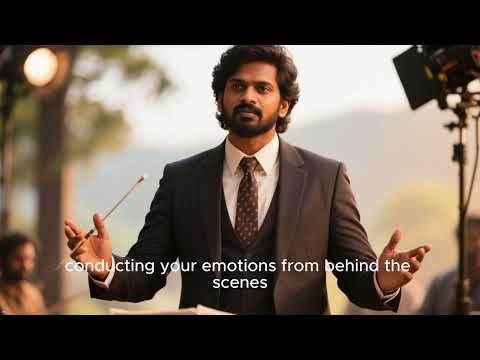
screech tells you to be scared. That's
Vya in a suit and tie conducting your
emotions from behind the scenes. So what
does this mean for us in the language of
the cult of psyche? It means you develop
what I call a sonic sigil. This is a
recognizable sound identity, a unique
audio signature that trains your
audience's body to know instantly, oh,
we're here now. The gate is open. The
ritual has begun. The current is on.
You're not just creating vibes for
vibe's sake. You are consciously and
deliberately building a repeatable
ritual container with sound. A space
where focus becomes possible. And we
must do this ethically. This part is
crucial because sound can be used to
manipulate. It can be used to stir up
anxiety, to create confusion, or to push
people into states where they're more
suggestible. So here's our code, our
ethical line in the sand. We use VIA to
create clarity, steadiness, courage, and
catharsis. We use it to help people feel
centered and strong. We are not here to
scramble people's minds or to farm their
anxiety for engagement. That's the
fundamental difference between building
a true temple and running a haunted
carnival. Now, I want to give you a
practice you can do. You can do this on
stream, in a video, or just by yourself
right now with almost no gear. The first
practice is called the one note ritual.
It takes about 60 seconds. Pick one
single tone. You can hum it, play it on
a keyboard, find a drone on a phone app,
or even use a singing bowl. Just hold
that one note gently. Don't try to
perform it. Just hold it steadily like
you're holding a candle in a dark room.
And while that sound is present, ask
yourself a simple question. What mood
does this note pull out of me? Just
notice it. Does it feel calm, sad,
tense? Then adjust just one thing about
it. Either make the note a little darker
by going lower in pitch or a little
brighter by going higher. Make it softer
by reducing the intensity or more
insistent by increasing it. Notice how
that one single change, one variable
shifts the entire inner weather of the
room and of yourself. That in its
simplest form is vaga. Okay, let's move
on to practice number two. The three
layer trans loop. This takes about 2
minutes. We're going to build a simple
sonic environment with three layers.
Layer A is a slow steady pulse. This can
be a gentle tap on your desk, a soft
clap, a metronum app, or a simple kick
drum beat. It's the heartbeat. Layer B
is a steady drone or a pad sound, a long
held out note. If you don't have an
instrument, you can just imagine it and
describe it. Imagine a low warm hum
filling the space. Layer C is a small
repeating motif, just three or for
simple notes, a tiny little riff, a
simple melodic pattern that plays over
and over. When these three layers are
stable, the pulse, the drone, and the
motif, the room settles. People stop
doom scrolling, their attention, which
was scattered across a dozen different
things becomes present. You didn't
demand their attention. You earned it by
building a field, an environment that
invites focus. And here's where it gets
really fun, especially for an audience.
You can let them choose the asterisk
grass asterisk, the emotional flavor.
You can ask your chat or your viewers,
"What do you need right now? Do you want
a mood of protection, revelation,
healing, or maybe even war mode for
tackling a tough subject?" Then you
adjust the sound to match. For
protection, you might use a slower beat,
lower notes, and a smooth texture. For
revelation, maybe a slightly faster
tempo, higher shimmering sounds, and
some bells. You are actively teaching
your audience to feel how sound crafts
reality. You're co-creating the space
with them. So divine art number two
isn't about learning to play guitar or
becoming a professional musician.
It's so much deeper than that. It's
about learning how sound steers
consciousness. Because if you can steer
consciousness, you can steer a
conversation. You can steer the energy
of a panel discussion. You can steer the
mood of a room, a community, a whole
night. That is vaja, the invisible hand,
the instrument that plays the room
itself. So here's your call to action.
First, start thinking about your sonic
sigil. What is a 5 to 8 second sound
that you can use to open every show to
signal that the space is now open?
Second, try building three simple modes.
Let's say protection, revelation, and
comfort. Just use tempo, pitch, range,
and texture. You don't need any fancy
music theory, slow and low for
protection, higher and sparkling for
revelation, mid-range [clears throat]
and soft for comfort. And third, on your
next stream or in your next video, ask
your audience to vote on the mood. Then,
switch the room live and tell them
exactly what you changed and why. Let
them feel the shift with you. Start
playing the room. Thanks for watching
and I'll see you for divine art number
three.
↑↓ navigate · Enter seek · Click to select
/// initiate_layer
Observers see the surface.
/// within ∞ The Current
Browse era →