// transmission
This episode of 'The Cult of Psyche' podcast explores the symbolism and role of The Fool in the tarot's Fool's Journey, delving into its significance as a representation of raw consciousness and the starting point of a soul's awakening. The host, Psyche, guides the listener through the major arcana, discussing the various cards and their lessons for the fool.
Original TransmissionsTonight, I want to talk about one of the
greatest hidden maps ever slipped into
human hands and disguised as a deck of
cards. The Fool's Journey. Not a
children's story, not a cute little
believe in yourself slogan with moons
and glitter glued onto it. No, this is
the anatomy of awakening. This is the
blueprint of becoming. This is what it
looks like when a soul gets thrown into
the furnace of existence and somehow
crawls back out with eyes that can't
actually see. The fool is not stupid.
That is the first lie people tell about
this card. The fool is raw consciousness
before conditioning finishes its work.
He is the sacred idiot, the divine
volunteer, the one who stands at the
edge of the cliff with a flower in one
hand and disaster in the other. He is
you before the world names you, before
fear trains you, before shame edits you
down into something smaller, quieter,
safer, and easier to control. The fool
steps forward because life does not
begin with certainty. It begins with a
leap. And the moment he leaps, he enters
the hall of powers. First, he meets the
magician who says, "You are not empty.
You came here with tools, will language,
focus, desire, action. The magician
teaches that reality is not only
something that happens to you. It is
also something you participate in.
Thought becomes symbol. Symbol becomes
action. Action becomes fate. The lesson
is simple and dangerous. What you direct
grows. Then comes the high priestess
seated between mystery and silence. She
does not explain. She waits. She teaches
the fool that not everything holy
arrives in words. Some truths come as
dreams, instincts, omens, dread,
attraction, stillness. She guards the
inner door. The magician says, "Make."
The priestess says, "Listen, without
her, power becomes noise." Then the fool
enters the garden of the empress where
life overflows.
But then rises the emperor, the
architecture of order, boundary, law,
structure, authority.
The fool now learns that chaos alone
does not create a life. Desire without
discipline turns into waste. Vision
without structure evaporates. The
emperor says build your temple or
someone else will build your cage. Then
comes the hierofphant. Keeper of
tradition, doctrine, sacred systems,
inherited wisdom. Here the fool learns
from institutions, teachers, customs,
lineages, books, rituals, and collective
memory.
And then of course the lovers. People
reduce this card to romance because
people are terrified of its real
meaning. The lovers is choice,
alignment, union through truth.
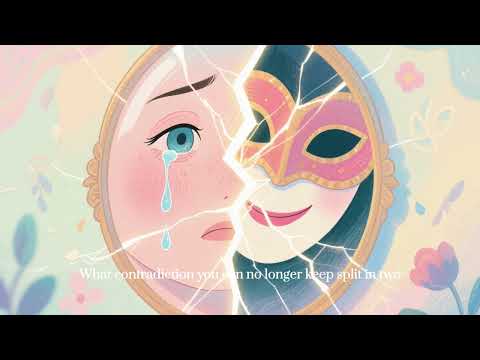
What values you marry, what path you
consent to, what contradiction you can
no longer keep split in two. The lovers
says you must choose and every true
choice kills a 100 false futures. Then
the chariot wheels thunder. The chariot
is movement, victory, force of
direction. Now the fool learns to drive
the conflicting beasts within him.
impulse and restraint, fear and
ambition, tenderness and aggression.
Then the fool meet strength.
The fool learns here that the shadow
cannot be beaten into holiness. It must
be met, contained, integrated. Strength
says, "Your darkness is not your enemy
unless you hand it the throne." Then
comes the withdrawal. The hermit steps
onto the mountain with a lantern that
does not light the whole world. Only the
next few honest steps. This is the card
of solitude, of sacred separation, of
leaving the crowd long enough to hear
your own signal underneath the static.
Then the wheel turns.
Sometimes wisdom is knowing when the
wheel is carrying you and when it is
crushing you. Then comes justice, not
revenge, not patty score settling.
Justice is balance, cause and effect,
moral geometry. The fool learns that
every action leaves a shape in the
field. Every lie creates debt. Every
avoidance compounds interest. Justice is
not always dramatic. Sometimes it is
simply the unavoidable harvest of what
was planted. And then everything pauses
upside down. The hanged man enters and
the fool learns the violent grace of
suspension. Waiting, surrender, seeing
from another angle. The ego hates this
card because it cannot bully revelation
into arriving faster. The hanged man
says, "Your old perspective is too
expensive now. Hang there. Be still. Let
the blood rush to the head. Let the
world look strange." Transformation
often begins when forward motion is
taken away. Then comes the card everyone
fears and almost nobody understands.
Death. Death is not punishment. Death is
not evil. Death is the stripping away of
forms that have finished speaking. The
fool loses identities here. Roles,
illusions, attachments, versions of
self, once needed but now rotten. This
is not the end of life. It is the end of
falseness masquerading as life. Death
says if you refuse to release what has
expired, you will call decay loyalty.
After death, a quieter power arrives,
temperance.
Heat. Heat.
Heat. Heat.
Heat. Heat.
The structures built on fraud, ego,
denial, fantasy or arrogance do not get
negotiated with here. They get struck
and the fool learns one of the hardest
truths in the whole deck. Sometimes
disaster is mercywearing clause.
Sometimes what falls needed to fold.
Sometimes the breakdown is the first
honest thing that has happened in years.
↑↓ navigate · Enter seek · Click to select
/// initiate_layer
Observers see the surface.
/// within ∞ The Current
Browse era →