// transmission
This episode explores the mythological figure of Lilith, examining her transformation from a demonized warning to a symbol of feminine sovereignty and resistance to patriarchal control. Psyche discusses how Lilith's story has been shaped by male anxiety and fear, and how she has been reclaimed as a symbol of freedom and liberation by modern feminist writers and thinkers.
Mythology & LoreLet's talk about Lilith. Not the cartoon
version. Not the cheap horror movie
version. Not the lazy patriarchal
bedtime story where any woman who says
no gets stamped with horns and thrown
into the dark. Let's talk about the
truth. Because Lilith is one of the most
misunderstood female figures in myth.
She has been called demon, devourer,
seductress, child killer, destroyer,
night monster. She's been turned into a
warning lady, a shadow with a woman's
face, a threat with a female voice. And
that alone should tell you something.
Whenever a culture is afraid of female
power, it does not simply disagree with
it. It mythologizes against it. It drags
it into the underworld, covers it in
ash, gives it claws, and then says,
"See, this is what happens when a woman
will not submit." That is Lilith's
story. or at least that is what was done
to her. Now, let's be accurate. Lilith
does not stroll cleanly out of Genesis
with a name tag that says, "Hello, I'm
Adam's first wife." That is not how the
text reads. The famous story of Lilith
as the first woman comes later,
especially in Jewish folklore and the
alphabet of Ben Sarah, where she is
described as being made from the same
earth as Adam and Refusing to lie
beneath him. She insists on equality. He
fuses subservience and leaves even
rather than obey. Think about that. She
does not beg. She does not bargain. She
does not stay and slowly die inside. She
lives and that is the offense. Not
wickedness, not corruption, not some
cosmic crime. The offense is refusal.
Lilith becomes intolerable the moment
she says, "I was made from the same
ground." That line is the lightning
strike in me. Because once a woman says
she is equal in origin, equal in spirit,
equal in authority over her own body,
the whole machinery of domination starts
rattling like loose iron. The story
cannot permit that without consequence.
So the rebel becomes the monster. This
is how demonization works. It is very
old. older than Twitter, older than
tabloids, older than gossip circles with
fake halos and knives behind their
backs. First they fear the woman, then
they rename the fear as evil. Then they
pretend they are protecting the world
from her. Lilith is the ancient
blueprint for that trick. Her roots
likely reach deeper than medieval
folklore. Scholars connect her name and
traits to older Mesopotamian demon
traditions to ly and likute figures
associated with night, danger, and
spirits. There is also a debated
biblical appearance in Isaiah 34-14
where the Hebrew term Lilith appears in
a desolate wilderness city. Though
translators and scholars differ on
exactly how to render it, in rebbitic
and later folk traditions, Lilith
becomes a night being feared, especially
around childbirth and infants, which is
why amulets invoking angelic names were
used to ward her off. So no, the truth
is not that Lilith was originally handed
to us as a neat feminist heroine with a
black velvet cape and a merch table. The
truth is more interesting than that. She
was feared first. She was shaped by male
anxiety, communal fear, sexual panic,
childbirth, terror, wilderness dread,
and the ancient human habit of giving a
face to the dark. Then something
remarkable happened. She survived the
across centuries. Lilith refused to stay
trapped inside the role assigned to her.
She kept changing. She moved through
folklore, through mysticism, through the
Talmud, through cabala, through medieval
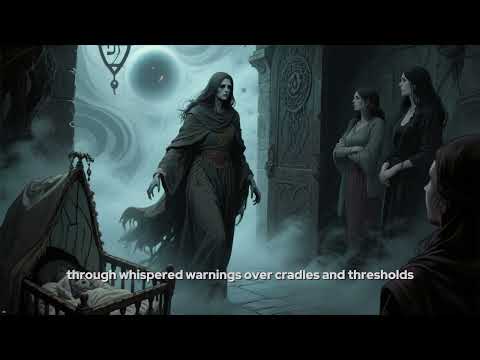
nightmare, through whispered warnings
over cradles and thresholds. And in the
modern world, women looked at this
figure, this condemned one, this exiled
one, this woman-shaped fear object, and
said, "Wait a maybe
upside down. Maybe the monster is just
the woman who would not kneel." That is
the great reversal. Modern Jewish
feminist writers, artists, and thinkers
reclaimed Lilith as a symbol of freedom,
sexual autonomy, spiritual independence,
and rebellion against domination. Judith
Muscog as famous retelling helped turn
Lilith from a patriarchal cautionary
tale into a figure of female alliance
and liberation. Even the feminist
magazine Lilith, founded in 1976, shows
how fully that old demon name was
transformed into a banner rather than a
curse. And that reclaiming matters
because myth is never just about the
past. Myth is a weapon, a mirror,
a prison. Ah,
Aki Lilith asks a question that still
makes people uncomfortable. What do you
call a woman who refuses the role
written for her? If she stays quiet,
they call her good. If she suffers
beautifully, they call her ver. If she
nurtures everyone while starving
herself, they call her holy. But if she
leaves, if she speaks, if she desires,
if she s if she names the arrangement as
unjust, suddenly the language changes.
Now she is dangerous. Now she is dark.
Now she is unnatural. Now she is too
much. Lilith lives in that accusation.
That is why people still respond to her
so strongly. She touches the livewire
between female freedom and social
punishment. But let's go deeper. Lilith
is not just rebellion for the sake of
rebellion. She's not chaos as an
aesthetic. She is not merely rage in
lipstick. The core of her power is
sovereignty. Sovereignty over the body.
Sovereignty over desire, sovereignty
over speech, sovereignty over whether
she stays in a structure that diminishes
her. That is what makes her frightening
two systems built on obedience. A woman
who can be tempted is manageable. A
woman who can be shamed is manageable. A
woman who still wants approval is
manageable. But a woman who no longer
accepts false authority, that woman
becomes mythic. And men who cannot
control that energy have always had two
options. understand it or demonize it.
History shows which option many of them
chose. Now, was Lilith really a goddess
in the strict historical sense of Jewish
folklore? Not exactly. She is more often
a demonized female figure, a night
being, a dangerous spirit, not a goddess
in the formal devotional sense. But in
modern spiritual and symbolic language,
many people experience her as a dark
goddess archetype because she has come
to represent rejected feminine power,
forbidden knowledge, erotic autonomy,
and sacred refusal. That is not ancient
consensus. That is modern
reinterpretation,
but it is a meaningful one. And
honestly, that distinction is important
because truth does not need fake
certainty. then it does not become less
powerful because the story evolved over
time. She becomes more powerful. It
shows that a story can be wrestled with,
a demon can be re-examined,
a curse can be turned into a blessing, a
warning can be turned into a map. Limit
is the patron saint of difficult women.
And I mean that as a compliment. She is
the patron saint of women who are called
too much, too loud, too angry, too
sexual, too independent, too unwilling
to make themselves small. She is the
patron saint of the woman who leaves the
garden to find herself in the wilderness
and discovers that the wilderness is
where she was meant to be all alone.
That is Lily. Not a cartoon villain,
not a one note goddess sticker, not a
neat little morality tale. She's the
echo of rebellion in a world that
rewards compliance. She is the shadow
cast by equality when hierarchy cannot
bear the light. She is the name given to
the woman who chose herself and was
punished for it. And because of that she
remains unforgettable.
↑↓ navigate · Enter seek · Click to select
/// initiate_layer
Observers see the surface.
/// within ∞ The Current
Browse era →