In this episode of the Cult of Psyche podcast, host Psyche delves into the true story behind the fairy tale of Rumpelstiltskin, exploring its hidden mythology and occult significance. He examines the original versions of the story, revealing the darker themes of power, control, and exploitation.
The episode begins with Psyche introducing the story of Rumpelstiltskin, a fairy tale that has been sanitized over time ▶ 0:00. He highlights the original versions of the story, which feature a miller who lies about his daughter's abilities to impress the king ▶ 0:48. The king imprisons the daughter, threatening to kill her unless she spins straw into gold ▶ 1:06. Rumpelstiltskin appears, offering to help her in exchange for a series of payments ▶ 1:21. Psyche notes that Rumpelstiltskin is the only character in the story who treats the daughter as a person capable of making decisions ▶ 2:26. The story takes a dark turn when the king decides to marry the daughter, and Rumpelstiltskin arrives to collect his payment, a child ▶ 2:40. However, he gives the daughter a chance to guess his name, which she eventually discovers and uses to reclaim her child ▶ 4:10.
interpretation
⬡ Interpretive Layer· AI interpretation
The story of Rumpelstiltskin appears to be about the exploitation of power and the objectification of women. It suggests that those in power will use and manipulate others to achieve their goals, and that true agency and autonomy are hard to come by. The character of Rumpelstiltskin, often seen as a monster, is revealed to be a complex figure who may be seeking connection and understanding. The episode continues the pattern of exploring the darker themes and hidden meanings behind folk tales and mythology, and encouraging listeners to think critically about the stories they have been told.
Hey, welcome back. Tonight we're doing something a little different. No guests, no chat games, just me, this chair, and a story. A scary one. You know how fairy talies work, right? Girl in trouble, monster in the dark, hero saves the day, the end. Go to sleep, children. The
world makes sense. Except it doesn't. And the original versions of these stories before the sanitizing before Disney, before the publishing houses decided children needed protecting from reality, they knew that the brothers grim weren't writing bedtime stories. They were writing field reports, observations from the edge of something
true. Tonight's story is Rumple Stiltskin. And I want to tell you what it's actually about. The setup real quick in case you're rusty. a miller, a nobody, a man with a daughter and nothing else worth mentioning, tells the king that his daughter can spin straw into gold. He lies. He lies because he wants to seem important in front of
power. And he uses his daughter's existence as the currency of that lie without asking her, without warning her. And here's where it gets interesting. No one saves her. Not her father, not a guard who feels sorry for her, not the king who put her there. A door opens in the dark and something small and ancient walks in and says, "I can help you. What
will you give me?" She gives him her necklace. He spins gold floor to ceiling. Next night, same room, bigger pile, same threat, same door. Same question. She gives him her ring. Third night, and this is where the king decides he wants to marry her, which is its own horror we'll get to. She has nothing left to give. And the creature
says, "Promise me your firstborn child." And she does. Now, the story wants you to feel a particular thing here. It wants you to feel dread. It wants you to feel like she made a terrible mistake, like she sold something sacred to a monster. But let's actually look at what happened. Her father sold her to a king
with a lie. The king imprisoned her under threat of death three times. Every man with power in this story used her as a resource. And then in the dark, something showed up and said, "I'll help you. Here's my price." Do you agree? She agreed freely three times with full knowledge of the terms. Ruple Stiltskin is the only character in this entire
story who treated her like a person capable of making a decision. Think about that. So, she marries the king because that's the reward for surviving. Apparently, you get to be property of the man who threatened to kill you. Romantic. Time passes. The baby comes and Rumple Stiltskin arrives to collect.
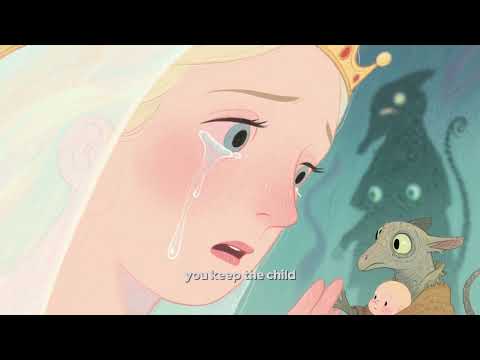
She begs. She weeps. She offers him wealth instead. And here, this is the part one find genuinely strange. He softens. He gives her three days. He says, "If you can guess my name, you keep the child." Why? Why does he do that? The story never explains it. The grim version just presents it as a plot
mechanism. He doesn't need her suffering. He made an agreement and the agreement is valid and he could simply take what he's owed. But he gives her a chance. Maybe, and this is the reading I keep coming back to, maybe the name was always the point. Not the child, the name. Names are the oldest magic. Every
tradition that works with power knows this. You name something, you have a relationship with it. You know its name, you have leverage over it. Rumple Stiltskin has been walking around nameless or as good as nameless for longer than kingdoms have existed. And here is a woman, a woman who has survived three death threats. A forced marriage, a year of being a queen who
everyone knows only as the Miller sdaughter, and he gives her three days to name him. She sends spies across the land. She collects names obsessively, the way she once had nothing but her own name and her father's worthless word. And on the third day, her messenger returns with a story. Deep in the forest, a small creature dancing around
a fire, singing a song with a name in it. His name, she says it, he shatters. Or in some versions, he tears himself in two, which is a specific kind of ending, not defeat, not death, division. As if the naming split something that had only been able to exist in the dark and the unnamed. Here's what I think the story is actually about. it. It's about what
happens when every person with power in your life treats you as a means to their end. Your father, your original protector, trades you for status. The king keeps you alive only as long as you're profitable. The castle, the gold, the crown, none of it is yours. You are the mechanism by which other people get what they want. And then something from
outside that system appears and makes you a deal, acknowledges your agency, waits for your consent, and the story calls it the monster. But the real horror, the horror the original tellers knew in the sanitized versions buried is the castle. The lie that fatherhood is protection when its performance. The horror that power calls itself love when
it means ownership. Rumple Stillilskin wanted a name. He wanted to be known. Maybe what he was collecting in all those deals across all those centuries was proof that he existed, that something in the world would hold the shape of him long enough to say it back. She guessed it, she said it, he shattered. And she was finally for the
first time in a room where she was the most powerful person present. That's the scary tale. Not the creature in the dark. The men in the light who never asked her name at all. Good night, cult. Stay strange.